A puppy and a senior dog walk into the same daycare and need almost opposite days. The puppy needs the world in small, safe doses. The senior needs the world to slow down and soften its edges. Camps that group and pace by life stage get both right; camps that treat every dog as a generic two-year-old get both wrong.
This guide covers what to ask and what to expect at each end of the age range in Concord, from first daycare days during the socialization window to boarding a grey-muzzled regular with medications and a slower morning.
- Puppy step one: finish the shots. Group play waits until the puppy vaccine series is complete plus a short build-up window. Parvo risk sets this rule and it does not bend.
- Puppy step two: start short. Half days, one play session, long naps. Puppies learn the routine, the staff, and dog manners without the overtired meltdown that undoes the lesson.
- Puppy step three: let older dogs teach. Calm, tolerant adult dogs correct puppy rudeness better than any human. A good camp curates those introductions on purpose.
- Senior step one: be honest at intake. Arthritis, heart conditions, medications, stairs trouble, hearing loss. Staff plan groups and rest around real information, not surprises.
- Senior step two: choose the mellow group. Shorter sessions, grass over hard running, more sniffing and wandering, shade and water always in reach.
- Senior step three: keep the routine sacred. Same food, same medication times, a familiar-smelling blanket. For an old dog, routine is comfort itself.
Expect the first daycare report on a puppy to sound undramatic: played a little, napped a lot, watched the big dogs. Watching is learning at that age. A puppy that spends a session observing from a safe spot with staff, then joins for ten minutes, is doing the work in the right order. Judge the program by whether doses grow week to week, not by whether day one produced a wrestling champion. Owners who push for full days in week one usually get an overtired puppy that mouths harder at home, which reads as a training problem and is actually a scheduling problem.
What puppies actually learn at daycare
Between roughly three and sixteen weeks, and continuing through the first year, puppies are building their model of what dogs are and how to be one. Supervised play teaches bite inhibition, reading body language, and recovering from social surprises. A puppy that only meets dogs on a tense leash learns a narrower, more anxious lesson. This is the developmental case for daycare, and it is why starting after vaccines, in short doses, pays off for years in calmer greetings and easier boarding later.
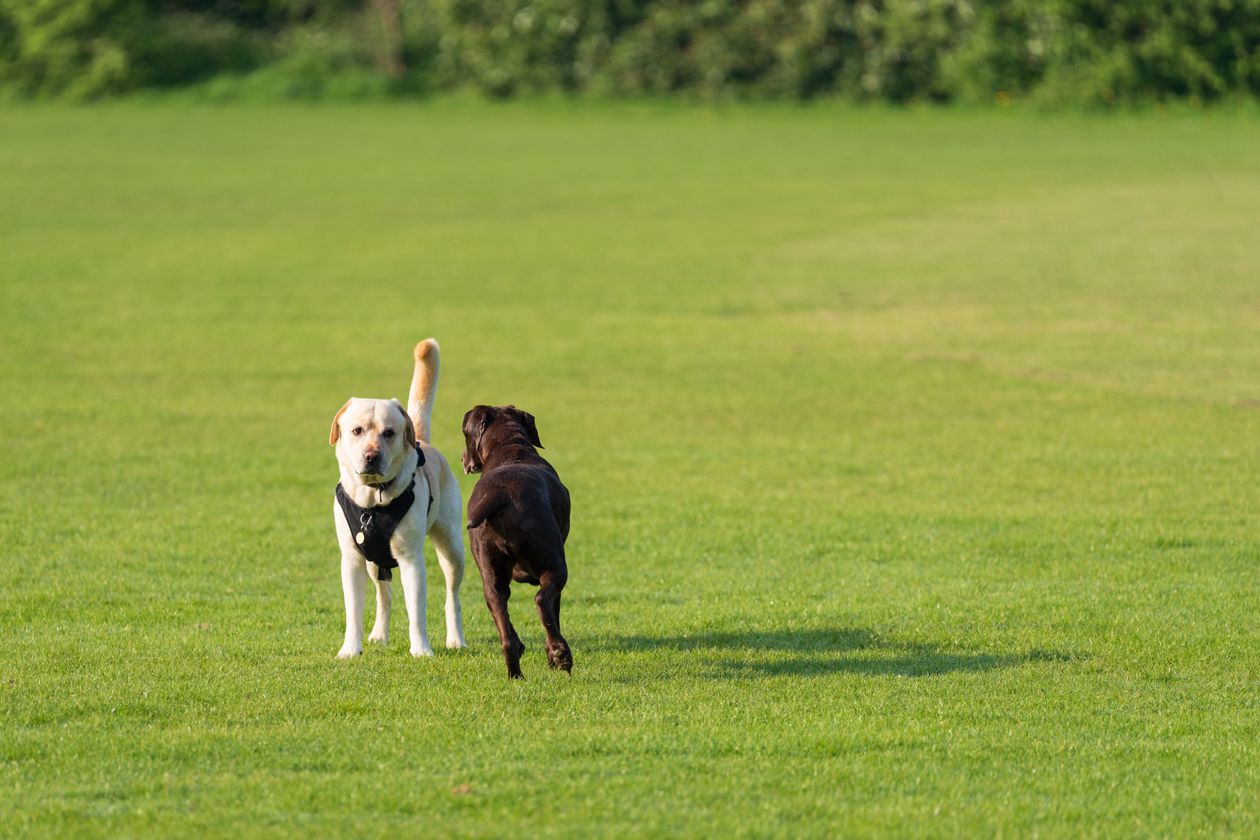
Middle-aged dogs deserve a sentence too, because they are the ones owners misjudge most kindly. A five or six year old dog that was a wild daycare athlete at two may now prefer the mellow yard and simply be too polite to say so. Watch for the dog that comes home sore, that lags at drop-off it once charged into, or that spends yard time alone at the fence. Dogs age out of groups gradually, and moving a regular to a calmer group is a success of the system, not a demotion. Staff who know your dog across years will usually raise it first if you give them the opening.
What seniors actually need from a stay
Old dogs board for their owners' travel, and they experience the stay through predictability and pain management. Medications must arrive in original packaging with the schedule written down, the rule camps like Camp Happy Hound publish for all guests. Ask about nighttime checks, non-slip surfaces, and how far the kennel is from the play yards. An old dog that is carried through a young dog's day will come home sore and stressed. An old dog given a mellow yard, a soft bed, and its routine will come home like it had a quiet holiday with friends.
At both ends of life, the trial run is the tool: a short daycare day before any long boarding stay. It teaches the puppy the place and teaches the staff the senior, and it costs little compared to learning the same lessons across a ten-day trip.
Common questions
When can a puppy start daycare?
After the puppy vaccine series is complete and a short window for immunity to build, often around four months. Start with half days and build up as the puppy matures.
Can senior dogs board, or is a house sitter always better?
Either can work. A senior that likes dog company and routine often boards well in a mellow group with medication support. A senior that is frail or anxious in new places may do better at home. A trial overnight settles it.
Do camps give medications to senior boarders?
Yes, when medications come in original packaging with written instructions. Share the full list and schedule at booking so staff can plan coverage, including overnight doses.
Photos in this guide are representative stock images.
← All guides from Camp Happy Hound← Back to Camp Happy Hound