Owners judge a daycare day by the dog that comes home: happily tired is success, wired is failure, asleep in the car is a legend told at dinner. Behind that judgment sits a real skill, reading how much play a dog needs and how much is too much, because the line between the two is different for a four-month puppy, a two-year athlete, and a nine-year senior.
This guide gives you the numbers that frame dog rest and activity, the body language that shows a dog tipping from fun into overload, and how good camps in Concord pace a day so dogs land on the right side of tired.
Play is a conversation, not a battery drain
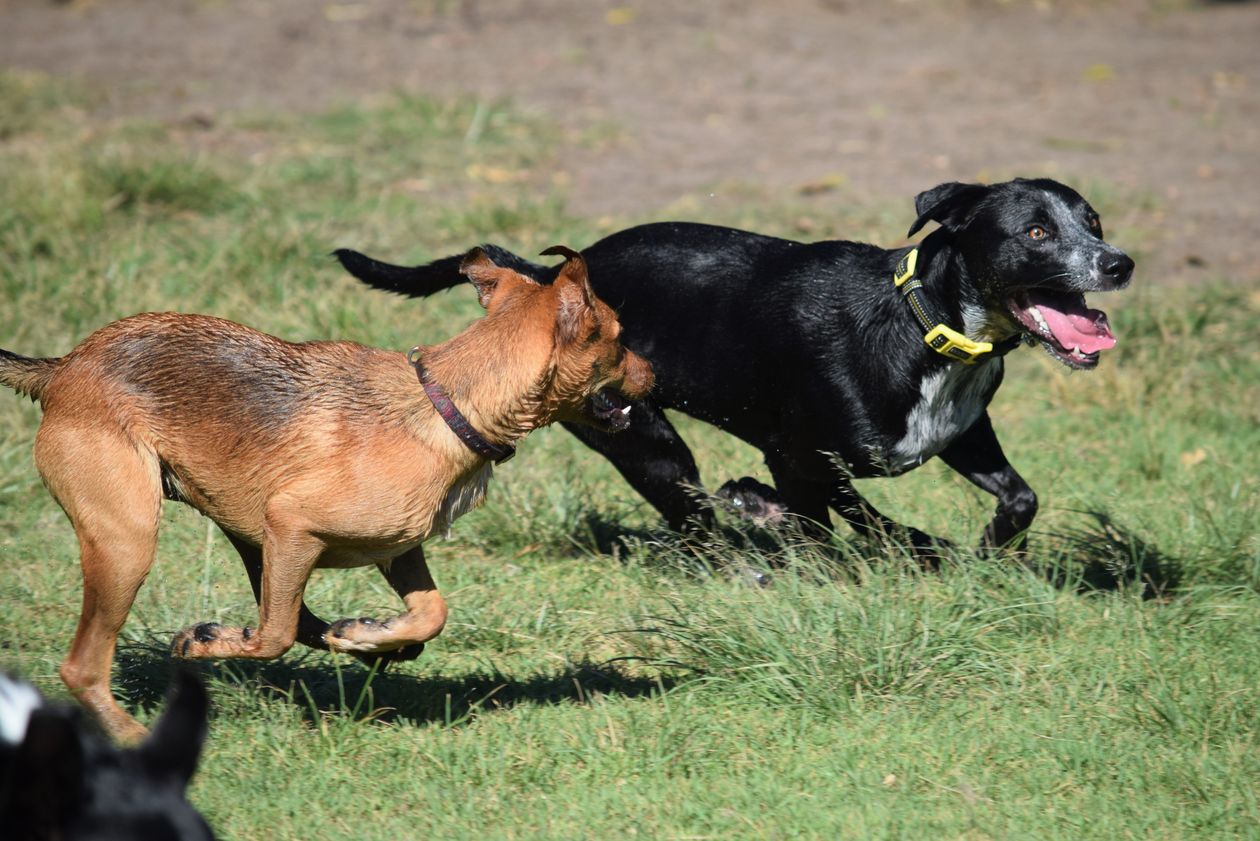
Healthy dog play has a rhythm: chase, pause, wrestle, pause, shake off, wander, drink, re-engage. The pauses are the tell. Dogs that keep inserting pauses are regulating themselves. A dog that cannot pause, that escalates speed and mouthiness and stops responding to the other dog's signals, is not having extra fun. It is over threshold, and that is when scuffles happen. Staff in a good yard are watching pauses more than action, and pulling dogs for a rest before the pause disappears.
Heat is the Piedmont multiplier on every dose decision. A session that is easy in April is heavy work in August, when humidity keeps dogs from cooling efficiently and even young athletes need shade, water, and shorter runs. Indoor play space exists for exactly these weeks, and a camp's summer rhythm should look different from its spring one. Ask how session length and yard rotation change in hot weather. The answer tells you whether pacing is a philosophy at that camp or just a brochure word, and it matters more in Concord's July than any other single question on this page.
Age changes everything
Puppies play in sparks and crash hard; their bones are still growing, which is why giant fetch sessions and all-day wrestling are capped for young dogs. Adult dogs in their prime can handle full days with sessions and rests, and genuinely need the outlet. Senior dogs still benefit from daycare's social life, but in shorter, calmer doses: a half day in a mellow group, more sniffing than sprinting. Tell the camp your dog's age and honest energy level, and let them place the group. A senior dropped into the young wrestlers' yard is a mismatch the intake form exists to prevent.
Weather and coat change the dose too. A thick-coated dog playing in a Concord August is working harder than the same dog in October, and black coats absorb heat faster in full sun. Brachycephalic breeds, the flat-faced dogs, cool themselves poorly at any temperature and should run shorter, calmer sessions as a standing rule, not as a reaction to a bad day. If your dog belongs to a heat-sensitive type, raise it at booking and write it on the intake form, because group placement and session length should bend around breathing before anything else.
Water is the other half of pacing. Dogs in group play drink socially, skip drinks while excited, and tank up at rest. A camp that builds water and shade into the session rhythm, and staff that notice the dog who has not drunk, is managing the variable that ends more play days than tired legs do.
The home reading: tired vs. too much
A well-paced day produces a dog that eats dinner, plays a little at home, and sleeps deeply. Too much produces a dog that cannot settle, pants and paces into the evening, gets mouthy with the family, or sleeps so hard it skips breakfast. One wired evening after a first visit is normal novelty. A pattern means the dose is wrong: shorten to half days, add rest days between visits, or ask for a calmer group. Camp Happy Hound groups by size and temperament for exactly this tuning, so bring the report from home. Staff cannot see the evening dog. You can, and your notes close the loop.
Common questions
How tired should my dog be after daycare?
Contentedly tired: eager for dinner, relaxed at home, and sleeping well. Unable to settle, or wiped out into the next morning, suggests the day was too long or the group too intense.
Can a dog go to daycare every weekday?
Some adult dogs thrive on it, but many do better with rest days between. Watch the evening behavior, not the morning enthusiasm. Dogs are always enthusiastic at drop-off.
Do senior dogs belong at daycare?
Many do, in the right group and dose: shorter days, calmer companions, more rest. The social and sniffing life of a mellow yard is genuinely good for older dogs.
Photos in this guide are representative stock images.
← All guides from Camp Happy Hound← Back to Camp Happy Hound